We are currently experiencing high call volume. We appreciate your patience and hope to return all voicemails as soon as possible. Please contact us by using our online form to help better ensure we receive your request in a timely manner.
We are currently experiencing high call volume. Please contact us by using our online form to help better ensure we receive your request in a timely manner.
Serving Long Island | Nassau County | Suffolk County
Key Takeaways:
German cockroaches pose a severe health threat because they spread dangerous pathogens, multiply at an explosive rate, and are highly resilient against eradication.
These pests carry and transmit serious illnesses like Salmonella, E. coli, and Gastroenteritis by picking up bacteria from sewers and drains and transferring it to food surfaces.
Airborne proteins from their shed skin, feces, and decaying bodies create a chronic respiratory hazard that can trigger severe allergies and asthma attacks.
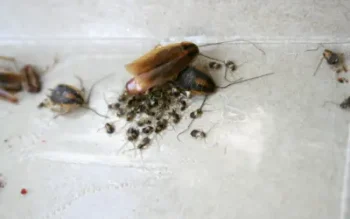
Their rapid population growth is driven by a short reproductive maturity cycle and female roaches carrying protected egg capsules containing up to 40 eggs until they hatch.
Eliminating German cockroaches by yourself is difficult because they can hide in microscopic spaces, survive on non-food items like cardboard or soap, and have developed a genetic resistance to store-bought insecticides.
How Dangerous Are German Cockroaches?
Are German cockroaches dangerous? Yes, they absolutely can be. They pose a direct threat to your household’s health and safety for three specific reasons: 1) they actively spread filth and disease throughout your living spaces, 2) they reproduce much faster than other pest species, and 3) they are exceptionally difficult to eliminate once they establish a foothold. Finding a German cockroach in your kitchen or bathroom is a serious issue that requires immediate attention. While these small pests do not cause structural damage to your property and rarely if ever bite, they remain one of the most hazardous insects to have inside your home.
Is It Dangerous to Live with German Cockroaches in Your House?
Yes – living with an active German cockroach infestation means constantly exposing your household to heavily contaminated surfaces. Because these pests are drawn to moisture and decomposing waste, they act as a direct bridge between unsanitary environments and your clean living spaces.
What Pathogens Do German Cockroaches Spread?
As these pests forage, they shed skin, leave behind droppings, and regurgitate digestive fluids. They are documented mechanical vectors for numerous serious illnesses. Some of the primary bacteria and pathogens they spread include:
Salmonella: Contaminates food and causes severe food poisoning, stomach cramps, and fever.
E. coli: Triggers severe intestinal infections, cramps, and diarrhea.
Staphylococcus and Streptococcus: Bacteria responsible for skin infections and other systemic illnesses.
Gastroenteritis: Commonly spread through food contaminated by cockroach waste.
Do They Cause Asthma, Allergies, and Respiratory Problems?
Yes, they do. Beyond foodborne illness, these insects create a chronic respiratory hazard inside a home. Their discarded skins, fecal matter, and decaying bodies break down into microscopic proteins that become airborne. Inhaling these particles can trigger severe allergic reactions, chronic coughing, and dangerous asthma attacks, particularly in young children and senior citizens.
The Source of the Contamination
You might be wondering, “Where do all of these bacteria and pathogens come from?” Fortunately, there’s a simple answer. German cockroaches thrive in dark, damp, and bacteria-rich environments. They regularly travel through sewage lines, garbage disposals, bathroom drains, and rotting organic material. As they traverse these areas, their spiny legs and bodies collect microscopic pathogens, grease, and fecal matter. When they migrate into your pantry or walk across your countertops, they deposit these contaminants directly onto your food and food-preparation surfaces.
German Cockroach Risk Factors – At a Glance
Risk Factor
Danger Level
Details
Information & Insights
Pathogen Transmission
Extreme
Spreads Salmonella, E. coli, and Staphylococcus via mechanical transfer.
They pick up bacteria on their legs/bodies from sewers and drains, depositing them directly onto food and cooking surfaces.
Asthma & Allergy Triggers
High
Airborne proteins from shed skins, feces, and carcasses cause respiratory distress.
This is a leading cause of chronic childhood asthma in infested homes; standard air filters rarely capture all the heavy particles.
Food Contamination
High
Feces, secretions, and regurgitated fluids spoil pantry items and surfaces.
Contaminated food must be discarded immediately; the insects leave behind a distinct, musty odor that signals a heavy infestation.
Rapid Population Growth
Severe
Explosive breeding cycles quickly overwhelm standard household environments.
A single egg capsule holds up to 40 eggs, and females protect them until hatching, ensuring a high survival rate for nymphs.
Psychological Stress
Moderate
Chronic anxiety, sleep disruption, and social stigma from a persistent infestation.
The stress of a nocturnal pest issue often leads homeowners to overuse dangerous retail chemicals out of desperation.
Bites / Physical Trauma
Low
Rarely bite humans; may nibble on eyelashes or skin flakes during extreme famine.
Bites only occur in massive infestations where food sources are entirely depleted. They do not inject venom.
Need an Estimate for a Cockroach Exterminator?
How Quickly Can a German Cockroach Infestation Become Dangerous?
A small number of German cockroaches can escalate into a severe household crisis in a remarkably short period. Their reproductive cycle is uniquely optimized for rapid population growth.
How Quickly Do They Breed?
Unlike other species that drop their egg capsules early, the female German cockroach carries her capsule (ootheca) with her until just before it hatches, protecting the young from predators and dehydration. Each capsule contains between 30 and 40 eggs, and with these roaches reaching reproductive maturity in as little as 50 to 60 days, multiple generations begin breeding simultaneously, causing the population to grow exponentially. Because of this compressed lifecycle, one female introduced to a kitchen can lead to an infestation of thousands of cockroaches within just a few months if left unchecked. To understand how quickly a problem can take hold, consider how the breeding rate of the German cockroach compares to other common household species:
Why Are German Cockroach Infestations So Hard to Eliminate?
Many homeowners attempt to resolve a cockroach issue using over-the-counter sprays or retail products, only to find the population growing larger. If it seems that this species is biologically engineered to survive standard eradication methods, they kind of are.
German Cockroach’s Resiliency
German cockroaches are exceptionally small and flat, allowing them to squeeze into tight crevices where standard treatments cannot reach, such as inside cabinet hinges, behind electrical outlets, and deep within appliance motors. They are also opportunistic feeders. If standard food crumbs are unavailable, they can survive by eating cardboard, wallpaper paste, soap, and bookbindings.
Resistance to Store-Bought Pest Products
Decades of chemical exposure have allowed this species to develop a strong genetic resistance to many retail insecticides. When retail bug sprays are used, they typically only kill the insects out in the open, while causing the rest of the population to retreat deeper into the walls. Combined with their rapid breeding habits, they easily replace lost numbers faster than DIY methods can eliminate them.
Difficulty of Eliminating Household Roaches
When assessing a home, professional exterminators rank species by the complexity required to eliminate them. German cockroaches always present the highest challenge.
Roach Species
Primary Indoor Habitat
Eradication Difficulty
Why?
American
Basements, crawlspaces
Low to Moderate
Large size, slow breeding, easily controlled at entry points.
Oriental
Damp drains, dark basements
Moderate
Prefer high moisture; fixing leaks and applying barriers works well.
German
Kitchens, bathrooms, electronics
High to Extreme
Rapid breeding, high chemical resistance, and deep harborage in appliances.
Should You Be Concerned About German Roaches If You Find Them in Your House?
Discovering German cockroaches in your home is a legitimate reason for concern, and it means you must take realistic, immediate action. However, it is not a reason to panic. Rushed reactions—like over-applying household bug sprays—often scatter the insects and drive them deeper into your living spaces, making the problem harder to solve. We do not recommend using retail bait stations or DIY foggers for German cockroaches. Retail solutions rarely impact the core of the colony. The most effective way to protect your home and eliminate the health risks is to hire a professional roach exterminator who has the training and tools to target the entire population.
Can You Prevent German Cockroaches?
Unlike other pests that crawl inside through a gap under a door or a tear in a window screen, a German cockroach infestation usually starts entirely by accident. These pests are master hitchhikers. They typically enter a home inside cardboard delivery boxes, grocery bags, used electronics, or secondhand furniture. Because it is incredibly difficult to prevent their physical arrival, your best defense is to keep your home clean and dry so a massive infestation cannot easily take hold:
Repair any leaking pipes or dripping faucets under sinks immediately.
Wipe down stovetops and clean behind appliances to remove grease buildup.
Store all pantry items in airtight plastic or glass containers.
Call Us for German Cockroach Control in Long Island
At Arrow Exterminating, we understand that German cockroaches are dangerous pests that require swift, decisive action. Unlike other household issues where you can afford to wait and experiment with DIY fixes, time is a luxury you do not have with this species. Every day you wait allows the fastest-breeding roach on the planet to multiply and entrench itself deeper into your home. If you have seen signs of these pests in your kitchen or bathroom, do not delay. Contact Arrow Exterminating today for reliable, professional German cockroach control in Long Island. Our team uses advanced techniques and targeted treatments to eliminate the problem at its source, restoring safety and sanitation to your household. Back to Cockroach Exterminators – Control – Removal
$50 OFF Initial Pest Service
When you sign up for a preventative plan
"*" indicates required fields
$100 OFF Initial Pest Service
When you sign up for a preventative plan
"*" indicates required fields
The Fastest Way to Manage Your Account
Get 24/7 access to your service history and account details – no phone call required.
Track your services
View upcoming service dates and past activity reports.
Review recommendations
Track technician findings and status updates.
Access documents
Download service reports and compliance documents.
View & pay invoices
Check balances and make secure payments instantly.


 Key Takeaways:


