

Key takeaways:
- Chew marks and droppings often point to rodents. Rodents will gnaw on almost anything, and their droppings are a clear sign they’ve been in the vicinity.
- Nighttime is a great time to try to listen for them. Rodents are nocturnal, so if you hear sounds in your walls or attic at night, there’s a good chance it’s rats or mice.
- Check your attic or basement: Rodents like quiet, low-traffic areas best.
- Rodents leave behind greasy “rub marks” on walls. They look like dark smudges and can reveal routes rodents take throughout your house.
Are you concerned about the possibility of rats or mice in your property? Then it’s important to know about the evidence they leave behind. Nocturnal rodents can be hard to spot on their own, but if you know what to look for, you’ll get the answers you need.
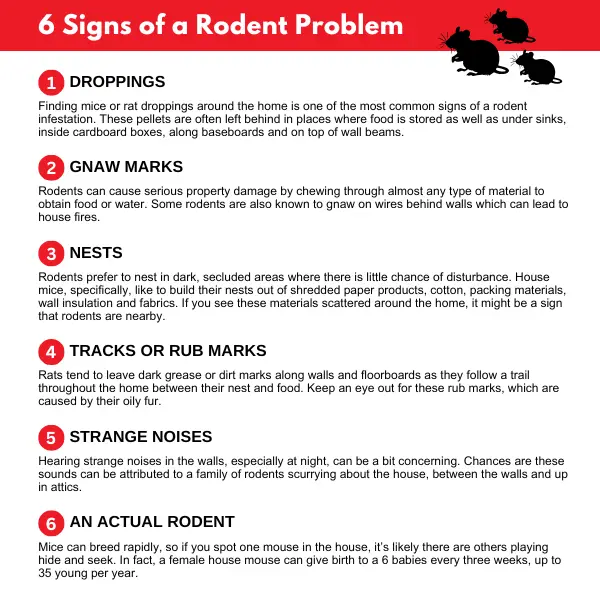
Here are the six can’t-miss signs of a rodent infestation you should never ignore:
- Droppings
- Bite or gnaw marks
- Rodent nests or nesting material
- Tracks and greasy rub marks
- Unusual nocturnal noises
- Live rodents
Need a Pest Control Estimate?

Leave your information below and we’ll be in touch with a FREE quote!
*During normal business hours. After hours calls will be returned the next business day.
What Are the Signs of a Rodent Infestation?
1. Droppings
Rodent droppings are small, brown, and often found in areas where they travel or eat. If you find rodent droppings, don’t handle them without PPE, and be sure to disinfect the area. Rodent droppings contain a wide variety of pathogens and bacteria, including hantavirus.
- What’s the difference between rat and mouse droppings? It’s primarily the size and shape. Mouse droppings are tiny, about ⅛” to ¼” in size, and rice-shaped. Rat droppings are often ½” to ¾” and shaped more like an olive pit.
- Where do you find rodent droppings most often? They are commonly found behind appliances, under sinks, in the pantry or cabinets, along baseboards, and in attics and basements.
2. Bite or Gnaw Marks
Rodents grow their teeth constantly throughout their life. They must keep gnawing to wear them down, or they will become overgrown.
- What’s the difference between rat and mouse gnaw marks? Mice leave small gnaw marks that resemble an animal scratching. Rat teeth are larger and create rough bite marks – even in hard materials like wood, plastic, and some metals.
- Where do rodent gnaw marks frequently appear? Food packaging is a common one, especially packages of grains and pet food. You may also find them on walls and doors, and even electrical wires, which can be a significant fire hazard.
3. Rodent Nests and Nesting Material
Rodents build their nests from whatever materials they can find in your home or nearby. These materials include shredded paper, fabric, plant matter, and even insulation. The nests themselves may be hidden and difficult to find.
- What’s the difference between rat and mouse nests? Mice nests are small, with fully shredded materials. They appear disorganized with sleeping and food areas in no apparent order. Rat nests are larger and more organized, with separate areas for food and rest.
- Where are rodent nests usually located? Rats usually choose out-of-the-way areas like crawlspaces, basements, and attics. Mice may nest in walls or even behind appliances.
4. Greasy Rub Marks and Tracks
When rodents find a route they like, they generally keep using that same route. Over time, you may start to notice their “rub marks” or “tracks.”
- What are rodent rub marks? When the oil and dirt from rodent fur come in contact with walls, it gradually builds up, leaving dark smudges. The heavier the smudge, the more rodent traffic.
- What are rodent tracks? Rodent tracks are footprints or tail marks you may notice in quiet parts of your home. If you suspect rodent activity, you can lay flour or corn starch in an area and see if tracks appear.
5. Unusual Nocturnal Noises
Rodents are nocturnal. When it’s late at night and the house is quiet, you’re more likely to hear them squeaking or running amok.
- What types of sounds indicate rodent activity? The most common sounds include scratching, scurrying, squeaking, and gnawing.
6. Live Rodents
Seems obvious, right? If you see live rodents in your house, it’s a sign of a rodent infestation. We mention it here because it’s important to note that if you see one rodent, it’s unlikely to be the only rodent present.
- What types of rats are found in houses in Long Island? We have Norway rats (aka brown rats) in our area.
- What types of mice are found in houses in Long Island? House mice are the most likely type of mouse to invade homes in our area. We also have deer mice, but they mostly prefer to stay outdoors.
Do You Have a Rodent Problem?
Spotting even one of these signs suggests the presence of rodents, and likely, an active infestation. The good news is that recognizing the problem early means you can take action.
We highly recommend contacting a local rodent exterminator without delay. They can conduct a thorough inspection to determine the extent of the issue and implement an effective solution.
For further details or a complimentary estimate, contact the experts at Arrow Exterminating today.
Back to Rat & Mice Exterminators – Control – Removal


