

Skip to content

Do Rodents Bite?

Despite their long incisors and constant need to gnaw, rats and mice rarely bite humans unless they are cornered, handled, or perceive a direct threat. These rodents are naturally timid and almost always choose flight over fight. However, when bites do occur, they carry health risks that require proper medical care.

Key Takeaways:

  • Rats and mice can both bite. Rats are larger, have stronger jaws, and are more likely to bite defensively if trapped. Mice are significantly more cautious and rarely bite unless physically restrained.
  • Contrary to common belief, small rodents such as rats and mice virtually never carry rabies and are not known to transmit the virus to humans, according to the Centers for Disease Control and Prevention (CDC).
  • The principal medical concerns following a rodent bite are bacterial soft-tissue infections, tetanus, and Rat-Bite Fever. Seemingly minor puncture marks can quickly escalate into serious systemic conditions like Rat-Bite Fever if left untreated.
  • Attempting to handle wild rodents directly is the single leading cause of bites, making professional pest control the safest strategy.
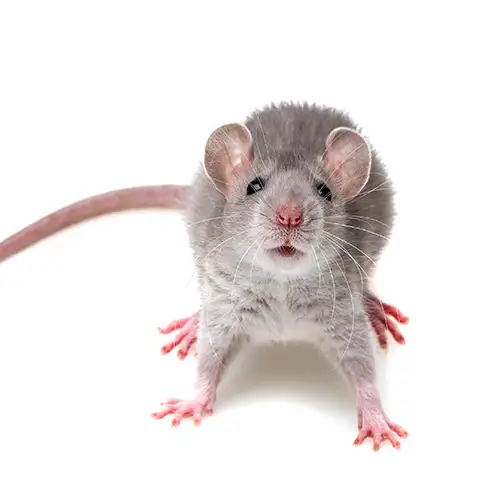
Gray rat against a white background - Keep pests away from your home with Arrow Exterminating in NY

What Does a Rodent Bite Look Like?

A rodent bite typically presents as small puncture marks or shallow lacerations accompanied by localized redness, slight swelling, and minor bleeding. Rat bites tend to produce deeper puncture wounds due to their larger teeth, whereas mouse bites often look like minor pinpricks or scratches. Because puncture wounds seal quickly over trapped oral bacteria, initial appearance does not always correlate with medical risk. Clean all bites immediately and evaluate for infection regardless of wound size.
Species Wound Appearance & Size Injury Depth
Rats Paired punctures (3โ€“6 mm apart) or skin lacerations. Deep tissue penetration possible; potential muscle/fat damage.
Mice Tiny pinpricks or shallow surface scratches (<2โ€“3 mm apart). Usually superficial; rarely penetrates beyond outer skin layers.
Squirrels / Chipmunks Paired punctures or jagged tears (4โ€“8 mm apart). Can leave moderate to deep punctures, often accompanied by claw scratches.
Pet Rodents (Hamsters / Guinea Pigs) Clean-cut punctures or narrow slices with small skin flaps. Moderate depth; sharp incisors slice cleanly through outer dermis.

Are Rodent Bites Dangerous?

Yes, you should treat any rodent bite as if it is potentially dangerous. Even minor rodent bites can drive oral bacteria deep into skin tissue. While rat bites pose significantly higher health risks due to jaw strength and pathogen load, mouse bites also present legitimate medical concerns.
Species Physical Trauma Primary Disease Risk Infection Rate Medical Urgency
Rats (Norway / Roof) High:ย Deep punctures, tissue crushing, heavy bleeding. High:ย Rat-Bite Fever (Streptobacillus moniliformis), tetanus. High:ย Rapidly sealing deep punctures trap oral bacteria. Immediate:ย Requires professional flushing and evaluation for antibiotics.
Mice (House / Deer) Low:ย Superficial pinpricks or light scratches. Low โ€“ Moderate: Localized bacterial infection, tetanus. Moderate:ย Lower risk, but unwashed bites can still infect. Moderate: Wash immediately with soap and water; check tetanus status.
Squirrels / Chipmunks Moderate โ€“ High:ย Jagged punctures, skin tears, claw scratches. Moderate: Secondary bacterial infections, tetanus. Moderate โ€“ High:ย Combined tooth and claw trauma increases bacterial entry. Prompt: Professional wound flushing and tetanus review recommended.
Pet Rodents (Hamsters / Guinea Pigs) Moderate:ย Clean-cut punctures or narrow slices. Low โ€“ Moderate: Localized bacterial infection, tetanus. Moderate:ย Open slices bleed out bacteria, but sealed punctures pose risk. Low โ€“ Moderate:ย Thorough home first aid; seek medical care if infection signs appear.

Warning Signs of Infection

Seek immediate medical evaluation if you experience any of the following symptoms within 14 days of a rat or mouse bite:

  • Fever, chills, or muscle aches
  • Nausea or vomiting
  • Joint pain or swelling
  • A spreading rash (frequently appearing on the hands and feet)
  • Expanding redness, warmth, throbbing, or pus around the wound site

ย 

What to Do If Youโ€™re Bitten By a Rodent

  • Wash the Wound Immediately: Clean the bite thoroughly with mild soap and warm running water for at least five minutes to clear out surface bacteria.
  • Apply Antiseptic: Apply an antibiotic ointment and cover the area with a clean, sterile bandage.
  • Seek Medical Care: Visit a doctor or urgent care clinic to determine if you need antibiotics or a tetanus booster.
  • Monitor the Wound: Track the bite site and your overall health for 14 days following the incident, seeking immediate care if symptoms of infection arise.

Do Rodents Ever Bite People While They're Asleep?

Yes, though rare, rodentsโ€”particularly wild ratsโ€”can bite sleeping people, usually attracted by food scent residue or crumbs on skin. These bites typically occur during severe indoor infestations or when a sleeping person unconsciously moves and startles a rodent on the bed.

  • Food Scents & Residue: Food particles, grease, or sugar on hands, face, or bedding frequently draw foraging rodents toward sleeping individuals.
  • Heavy Infestations: Overcrowded rodent populations force pests to roam more boldly at night, increasing the likelihood of human contact.
  • Accidental Trapping: Involuntary shifts or movements during sleep can trap a rodent against blankets, prompting an immediate defensive bite.
  • Vulnerable Individuals: Infants, the elderly, or bedridden individuals face higher risk because they cannot easily detect or ward off a foraging pest.

Do Rodents Bite Pets?

Yes. While wild rodents prefer to flee, they will aggressively bite dogs, cats, or caged animals if cornered, attacked, or defending a nest. Rats are particularly dangerous to pets due to their powerful jaw strength and aggressive self-defense instincts.

  • Physical Trauma & Abscesses: Sharp rodent teeth drive oral bacteria deep into skin layers. Because puncture wounds seal over quickly on the surface, trapped bacteria frequently lead to severe, painful subcutaneous abscesses.
  • Disease Transmission: Rodent bites and saliva contact can infect pets with dangerous bacterial pathogens, including Leptospirosis, Rat-Bite Fever (Streptobacillus moniliformis), and Salmonellosis.
  • Secondary Parasite Risks: Direct physical scuffles allow wild parasitesโ€”such as fleas, ticks, and mitesโ€”to transfer immediately to domestic pets, introducing additional health vectors.
  • High-Risk Scenarios: Hunting breeds (such as terriers or outdoor cats) cornering rodents in enclosed spaces, pets disturbing nests in sheds or garages, and wild rats invading outdoor rabbit hutches, chicken coops, or bird enclosures.

Preventing Rodent Bites

Handling wild rodents directly is the single leading cause of rodent bites. If you notice signs of a rodent infestation, avoid setting DIY traps and leave it to the professional rodent control experts.

Contact Arrow Exterminating today to schedule a professional inspection and safely locate, eliminate, and seal entry points on your property.

$50 OFF Initial Pest Service

When you sign up for a preventative plan

$100 OFF Initial Pest Service

When you sign up for a preventative plan